


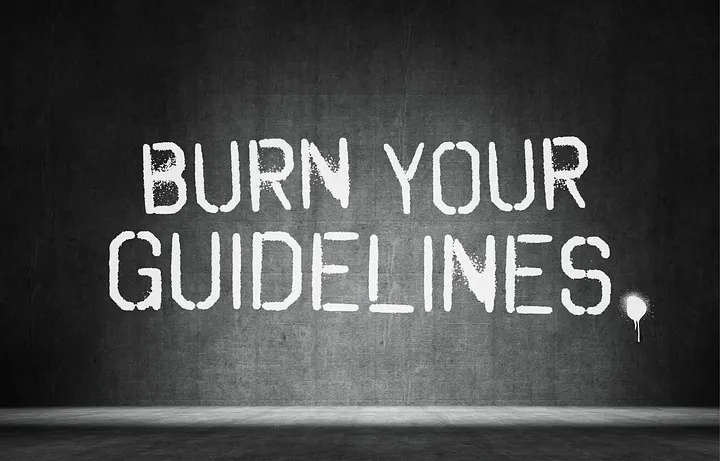
What are brand guidelines? Are they merely a historical snapshot or fee justification? Brand guidelines are not just about consistency; they are strategic tools that empower you to shape your brand’s identity and narrative.
Brand guidelines should interpret brands rather than constrain ideas. Is it a behavioural consistency? A visual consistency? Consistency of tone or voice? Consistency of temperature or ambience? Is it ease of entry and exit? Location? Dimensions and weight? Attitude?
Do you need to present a barrier for exclusivity? And what is that exclusivity? Is it price or credentials? Defending logo white space is only a tiny part of the picture you must manage.
Customers could not care less about your rule book. The purpose of brand guidelines is to maintain uniformity. However, where do you need to be consistent in managing customer expectations? What must you repeat daily to uphold a particular quality and maintain a reputation?
The Flipside
When an opportunity presents itself, you must move quickly. Reinvention outweighs convention. Refrain from falling into the trap of thinking that visual brand consistency alone is enough to create an impactful brand. Yes, you need consistency to be recognisable but remember: you need to know what to be consistent with.
Visual consistency is only one part of the puzzle. Logo guidelines are easy, but proper brand consistency extends to your verbal tone, interactions, and behaviour patterns.
- Visual Consistency: Proportional rules are easy to enforce and ensure visual recognition.
- Verbal Consistency: What key messages define your value? What speech patterns signal your brand voice?
- Behavioural Consistency: How do your actions reflect your brand’s promise?
Brand guidelines should help you find a balance, not box you in — partner with a designer who can visualise your brand and understand the commercial realities of keeping it relevant.
A good designer can help you translate your brand vision into visual and verbal elements, ensuring that your brand guidelines are not just a set of rules but a living, breathing representation of your brand. Brands must evolve as markets shift, competitors change, and customer expectations evolve. Your brand must retain consistency but also adapt.
Adaptability and Flexibility
Adapting to market pressures is essential. Consistency is vital for building a reputation, but true brand success lies in knowing what you need to be consistent with and where to be flexible. For instance, in a crisis, you might need to adapt your brand’s tone and messaging to be more empathetic and understanding.
Reinvention outweighs convention.
Repetition Becomes Reputation
Ultimately, guidelines are a tool. Through repetition, you build a reputation. But don’t forget — your guidelines should also allow for strategic flexibility when it counts. An adept brand custodian knows the rules and recognises when to break them.
What I’ve Learned
- Brand guidelines ensure consistency, but they should interpret and evolve a brand, not restrict it.
- Consistency in a brand involves more than visuals; it includes behaviours, tone, location, and exclusivity.
- Brand guidelines should evolve with the market, not remain static.
- Visual, verbal, and behavioural consistencies play vital roles in brand identity.
- Flexibility is key — work with a designer who understands brand vision and commercial realities.
- True brand strength lies in knowing which elements must remain consistent and where adaptability is needed.
- Repetition in following guidelines builds reputation, but strategic rule-breaking keeps a brand dynamic and relevant.
The Key Question You Must Ask
What exactly should you be consistent with?